



HRIS (Human Resource Information System)
Human Resource Information System
A (HRIS) is a software solution that helps organizations manage their human resources functions and processes. It serves as a centralized database for employee information and automates various HR tasks, making it easier for HR professionals to manage employee data, payroll, benefits, recruitment, performance management, and compliance.
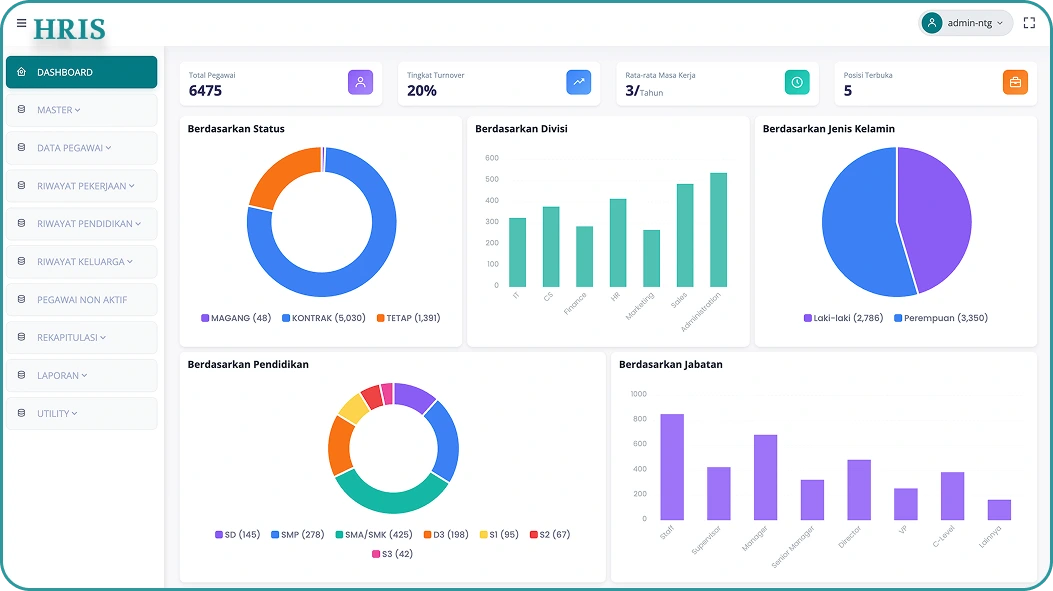
Features

Employee Database Management
Centralizes all employee information, including personal details, job history, qualifications, and contact information.

Recruitment and Applicant Tracking
Streamlines the recruitment process by managing job postings, applications, resumes, and candidate tracking.

Onboarding
Facilitates the onboarding process for new hires, including document management, training schedules, and orientation programs.

Time and Attendance Tracking
Monitors employee attendance, work hours, and leave requests, often integrating with time clocks or biometric systems.

Payroll Management
Automates payroll processing, including salary calculations, tax deductions, and direct deposit, ensuring timely and accurate payments.

Benefits Administration
Manages employee benefits programs, including health insurance, retirement plans, and other perks, allowing employees to enroll and make changes.

Performance Management
Supports performance appraisal processes, goal setting, and feedback mechanisms to evaluate employee performance and development.

Training and Development
Tracks employee training programs, certifications, and professional development opportunities, helping to manage skill enhancement.

Compliance Management
Ensures adherence to labor laws and regulations by maintaining necessary documentation and reporting capabilities.

Reporting and Analytics
Generates reports and analytics on various HR metrics, such as turnover rates, employee demographics, and performance trends, aiding in strategic decision-making.

Employee Self-Service Portal
Provides employees with access to their personal information, pay stubs, benefits enrollment, and the ability to submit requests (e.g., time off) online.

Succession Planning
Ensures adherence to labor laws and regulations by maintaining necessary documentation and reporting capabilities.

Document Management
Stores and manages important HR documents, such as contracts, performance reviews, and compliance records, in a secure and organized manner.